Beyond the health screening: Building healthier futures in Vredenburg
What does it take to build a healthier community? Better access to healthcare certainly helps, but so does understanding what’s in our food, knowing our health numbers and having the support to make meaningful changes. And perhaps most importantly, ensuring that the people who live in these communities are part of shaping the solutions.
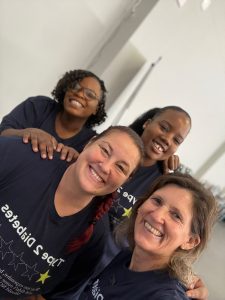
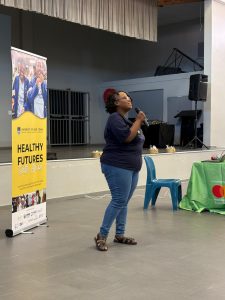
On Tuesday, 10 November 2026, The Noakes Foundation’s Eat Better South Africa (EBSA) programme joined the University of Cape Town’s Healthy Futures South Africa Learning Circle at the Louwville Community Hall in Vredenburg. The event brought together community members, local organisations and stakeholders to explore how addressing community health and social challenges could also create opportunities for skills development, employment and local entrepreneurship.
For EBSA, it was an opportunity to do what we do best: take conversations about metabolic health out of the clinic and into the community, where everyday food choices are made.
A little sugar can be a big surprise
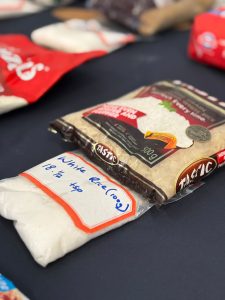
One of EBSA’s contributions to the day was a practical sugar demonstration, designed to help people visualise just how much sugar can be hiding in everyday foods and drinks.
We often talk about reducing sugar, but it’s not always easy to translate the information on a food label into something meaningful. What does 20 or 30 grams of sugar actually look like? And how many teaspoons might we be consuming without really thinking about it?
These demonstrations help turn abstract numbers into something people can see and understand.
Importantly, the aim isn’t to tell people what they can or cannot eat. It’s about giving them the knowledge to make more informed decisions, particularly in environments where food choices are influenced by affordability, availability, convenience and deeply established habits.
It’s also an opportunity to start conversations about how our everyday diets influence blood glucose regulation, insulin resistance and the development of metabolic conditions such as type 2 diabetes.
Sometimes, a few teaspoons of sugar laid out on a table can communicate more than a lengthy nutrition lecture.
Knowing your numbers is only the beginning
Alongside the nutrition education, the EBSA team offered basic health screenings, including blood pressure, waist circumference, and weight measurements.
These simple measures can provide useful insights into cardiometabolic health. Elevated blood pressure and excess abdominal fat, for example, are associated with increased risk of cardiovascular disease and type 2 diabetes, even when someone feels perfectly well.
But the value of a community screening isn’t simply in recording a number.
It’s in the conversation that follows. What does that number mean? Why does it matter? And what practical steps might help improve it?
At EBSA, we believe that health information is most useful when people understand it and feel equipped to act on it. A screening can identify potential areas of concern, but education, appropriate clinical follow-up and ongoing support are what help translate that awareness into meaningful change.
Healthier communities, more opportunities
What made this particular outreach event interesting was the wider conversation taking place around health and employment.
Through the Healthy Futures South Africa Learning Circle, participants explored how community health and social priorities could be linked to opportunities for employment, income generation and small-business development.
Working in groups, participants were encouraged to identify priority challenges, consider the skills and resources already available within their communities, and explore what would be needed to turn potential solutions into practical opportunities.
The discussions were designed to go beyond identifying problems. They asked an equally important question: what can communities build with the knowledge, people and resources they already have?
This approach resonates strongly with EBSA’s community-based model.
Our six-week nutrition education programme is delivered with the support of community coaches who help participants understand metabolic health, make practical dietary changes and navigate the everyday challenges that can make healthy eating difficult.
By developing skills within communities, rather than relying exclusively on outside expertise, programmes like EBSA can help build local capacity alongside health knowledge.
And when it comes to making healthier communities, local knowledge is not an optional extra. It is essential.
From a day of outreach to six weeks of support
While the day’s sugar demonstrations and health screenings provided an introduction to EBSA, our hope is that the conversations started in Vredenburg will continue well beyond the event.
During the outreach, the EBSA team initiated a community WhatsApp group to maintain contact with interested participants, share information and explore opportunities to introduce the six-week Eat Better South Africa programme within the community.
There is also an opportunity to involve interested community workers, building on the Learning Circle’s emphasis on skills development, community participation and employment.
The six-week programme takes participants beyond general advice to eat more healthily. It focuses on understanding the relationship between food and metabolic health, reducing sugar and refined carbohydrates, choosing affordable, nourishing whole foods and developing habits that can be maintained in everyday life.
Regular measurements, practical education and ongoing group support help participants recognise their progress and identify where further changes may be beneficial.
For Vredenburg, the outreach event represents a first step towards exploring how this model could be introduced locally, with community members and workers playing an active role in its development.
The next step matters most
Community outreach days are valuable. They bring people together, introduce new ideas, and create opportunities for conversations that might otherwise never happen.
But the real opportunity lies in what happens afterwards.
A blood pressure reading is useful, but understanding it and following up when necessary is better. Knowing how much sugar is in a favourite drink is interesting, but having the knowledge, confidence and support to make different choices is where change begins.
And introducing a health programme to a community is one thing. Building the relationships and local capacity needed to sustain it is another.
We are grateful to the University of Cape Town’s Healthy Futures South Africa initiative and its partners for inviting EBSA to participate in the Vredenburg Learning Circle and for creating a space where health, education and opportunity can be explored together.
We look forward to building on the connections made during the day and exploring what the next chapter of EBSA in Vredenburg might look like.
Because healthier futures aren’t built in a day, they’re built through the everyday choices, conversations and connections that follow.